Large Dragon, typically Neutral Evil | |||||||||||||||||||||||||||||||||||||||||||||||
|
AC 16 (natural armor)
Initiative +1 (11)
| |||||||||||||||||||||||||||||||||||||||||||||||
HP 93 (11d10 + 33) | |||||||||||||||||||||||||||||||||||||||||||||||
Speed 40 ft., Burrow 20 ft., Fly 80 ft., Swim 40 ft. | |||||||||||||||||||||||||||||||||||||||||||||||
| |||||||||||||||||||||||||||||||||||||||||||||||
| Skills Perception +5, Persuasion +6, Stealth +7 | |||||||||||||||||||||||||||||||||||||||||||||||
| Resistances Poison, Psychic | |||||||||||||||||||||||||||||||||||||||||||||||
| Immunities Charmed, Frightened, Poisoned | |||||||||||||||||||||||||||||||||||||||||||||||
| Senses Blindsight 30 ft., Darkvision 150 ft., Passive Perception 15 | |||||||||||||||||||||||||||||||||||||||||||||||
| Languages Common, Draconic, Undercommon | |||||||||||||||||||||||||||||||||||||||||||||||
| CR 5 (XP 1,800; PB +3) | |||||||||||||||||||||||||||||||||||||||||||||||
Actions | |||||||||||||||||||||||||||||||||||||||||||||||
Multiattack. The dragon makes one Bite attack and two Claw attacks. Bite. Melee Weapon Attack: +7 to hit, reach 10 ft., one target. Hit: 9 (1d10 + 4) piercing damage plus 3 (1d6) poison damage. Claw. Melee Weapon Attack: +7 to hit, reach 5 ft., one target. Hit: 7 (1d6 + 4) slashing damage. Nightmare Breath (Recharge 5–6). The dragon exhales a cloud of spores in a 30-foot cone. Each creature in that area must make a DC 14 Wisdom saving throw. On a failed save, the creature takes 22 (4d10) psychic damage, and it is frightened of the dragon for 1 minute. On a successful save, the creature takes half as much damage with no additional effects. A frightened creature can repeat the saving throw at the end of each of its turns, ending the effect on itself on a success. | |||||||||||||||||||||||||||||||||||||||||||||||
Customizing Dragons FTD p33[−]You can customize any dragon's stat block to reflect the dragon's unique character. Minor changes such as those below are easy to make and have no impact on a dragon's challenge rating. Languages. Most dragons prefer to speak Draconic but learn Common for dealing with allies and minions. But given their high Intelligence and long life span, dragons can easily learn additional languages. You can add languages to a dragon's stat block. Skills. Most dragons are proficient in the Perception and Stealth skills, and many dragons have additional skill proficiencies. As with languages, you can customize a dragon's skill list (even doubling their proficiency bonus with certain skills) to reflect particular interests and activities. You can also give a dragon tool proficiencies, particularly if the dragon spends time in Humanoid form. Spells. See the "Variant: Dragons as Innate Spellcasters" inset(s), below. Other Traits and Actions. You can borrow traits and actions from other monsters to add unique flavor to a dragon. Consider these examples:
Variant: Dragons as Innate Spellcasters FTD [−]This dragon can innately cast three spells, once per day each, requiring no material components. Each spell's level can be no higher than 1st. The dragon's spell save DC is DC 14, and it has +6 to hit with spell attacks. A suggested spell list is shown below, but you can also choose spells to reflect the dragon's character. A dragon who innately casts druid spells feels different from one who casts warlock spells. You can also give a dragon spells of a higher level than this rule allows, but such a tweak might increase the dragon's challenge rating—especially if those spells deal damage or impose conditions on targets. Source: FTDVariant: Dragons as Innate Spellcasters MM'14 p86[−]Dragons are innately magical creatures that can master a few spells as they age, using this variant. A young or older dragon can innately cast a number of spells equal to its Charisma modifier. Each spell can be cast once per day, requiring no material components, and the spell's level can be no higher than one-third the dragon's challenge rating (rounded down). The dragon's bonus to hit with spell attacks is equal to its proficiency bonus + its Charisma bonus. The dragon's spell save DC equals 8 + its proficiency bonus + its Charisma modifier. This dragon can innately cast three spells, once per day each, requiring no material components. Each spell's level can be no higher than 1st. The dragon's spell save DC is DC 14, and it has +6 to hit with spell attacks. See the spell page for a list of spells the dragon is capable of casting. | |||||||||||||||||||||||||||||||||||||||||||||||
| Source: FTD, page 175. Additional information from FTD, page 33. Reprinted as Young Deep Dragon in FRAiF. | |||||||||||||||||||||||||||||||||||||||||||||||
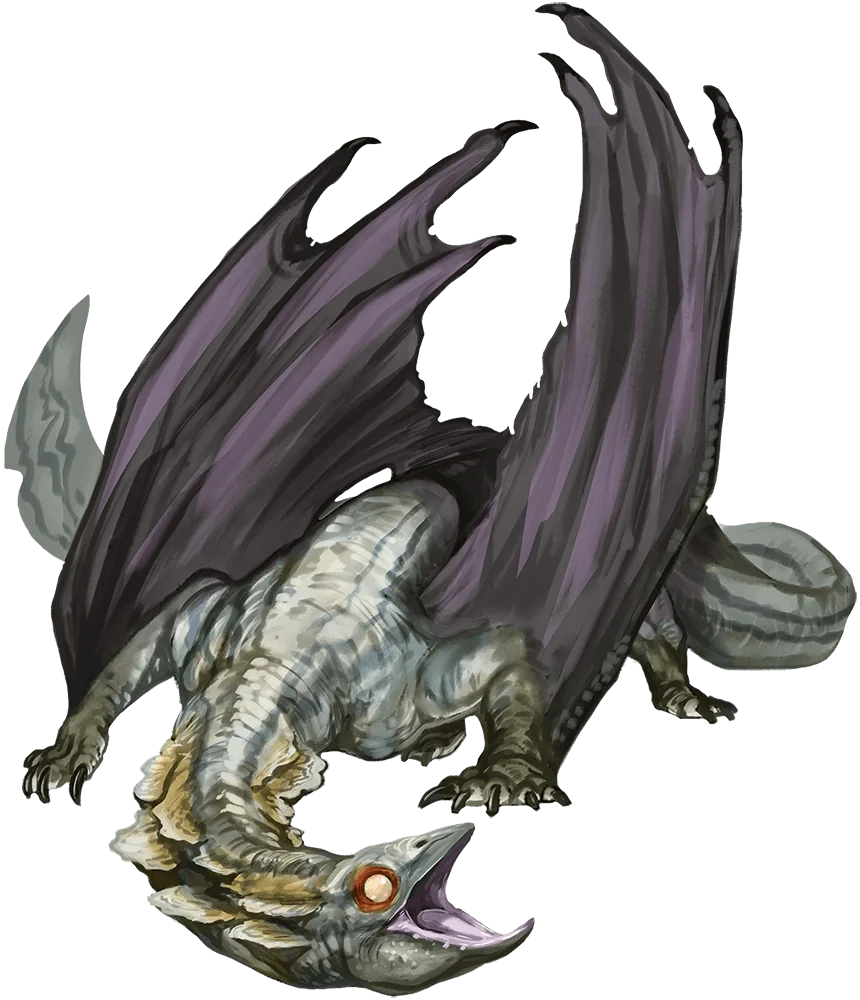
Brynn Metheney Creating a Deep Dragon[−]Use the Deep Dragon Personality Traits and Deep Dragon Ideals tables to inspire your portrayal of distinctive deep dragon characters, and use the Deep Dragon Spellcasting table to help select spells for a spellcasting dragon. Deep Dragon Personality Traits[−]
Deep Dragon Ideals[−]
Deep Dragon Spellcasting[−]
Deep Dragon Adventures[−]The Deep Dragon Adventure Hooks table offers suggestions for stories and adventures involving deep dragons. Deep Dragon Adventure Hooks[−]
Connected Creatures[−]Deep dragons appreciate the company of other dragons. Although they view most other species as inferior to dragonkind, having worth only as servants or tools, the rare individuals who impress them can sometimes earn respect as partners—albeit junior ones. Young Deep Dragon Connections[−]
Making their lairs in the depths of the Underdark, deep dragons are nightmarish cousins of chromatic dragons. The warped magical energy of their subterranean realm gives them the ability to exhale magical spores that instill fear and scar the mind. Deep dragons' black-and-gray hide is smooth like a salamander's, and their eyes are pale. As they age, their spore breath causes fungi to bloom across their skin, especially around the head and neck. Their wings are attached to their front legs and can fold in close to the body, allowing deep dragons to easily maneuver through relatively narrow tunnels. Deep dragons often hoard secrets, delighting in knowledge of far-off lands. Many seek out new insights and tricks that they can use against other denizens of the Underdark, preferring social manipulation and crafty dealmaking to exerting themselves in combat. Deep dragons look down on any creature that isn't useful to them, though they are willing to bargain for knowledge they lack. | |||||||||||||||||||||||||||||||||||||||||||||||||||||||||||||||||||||||||||