Large Beast, Unaligned | |||||||||||||||||||||||||||||||||||||||||||||||
|
AC 13 (natural armor)
Initiative +2 (12)
| |||||||||||||||||||||||||||||||||||||||||||||||
HP 100 (8d10 + 24) | |||||||||||||||||||||||||||||||||||||||||||||||
Speed 20 ft., Swim 40 ft. | |||||||||||||||||||||||||||||||||||||||||||||||
| |||||||||||||||||||||||||||||||||||||||||||||||
| Skills Perception +3, Stealth +4 | |||||||||||||||||||||||||||||||||||||||||||||||
| Senses Passive Perception 13 | |||||||||||||||||||||||||||||||||||||||||||||||
| Languages — | |||||||||||||||||||||||||||||||||||||||||||||||
| CR 4 (XP 1,100; PB +2) | |||||||||||||||||||||||||||||||||||||||||||||||
Traits | |||||||||||||||||||||||||||||||||||||||||||||||
Hold Breath. The plesiosaurus can hold its breath for 1 hour. Two Heads. The two-headed plesiosaurus has advantage on Wisdom (Perception) checks and on saving throws against being blinded, charmed, deafened, frightened, stunned, and knocked unconscious. | |||||||||||||||||||||||||||||||||||||||||||||||
Actions | |||||||||||||||||||||||||||||||||||||||||||||||
Multiattack. The two-headed plesiosaurus makes two bite attacks. Bite. Melee Weapon Attack: +6 to hit, reach 10 ft., one target. Hit: 14 (3d6 + 4) piercing damage. | |||||||||||||||||||||||||||||||||||||||||||||||
| Source: TTP, page 18 | |||||||||||||||||||||||||||||||||||||||||||||||
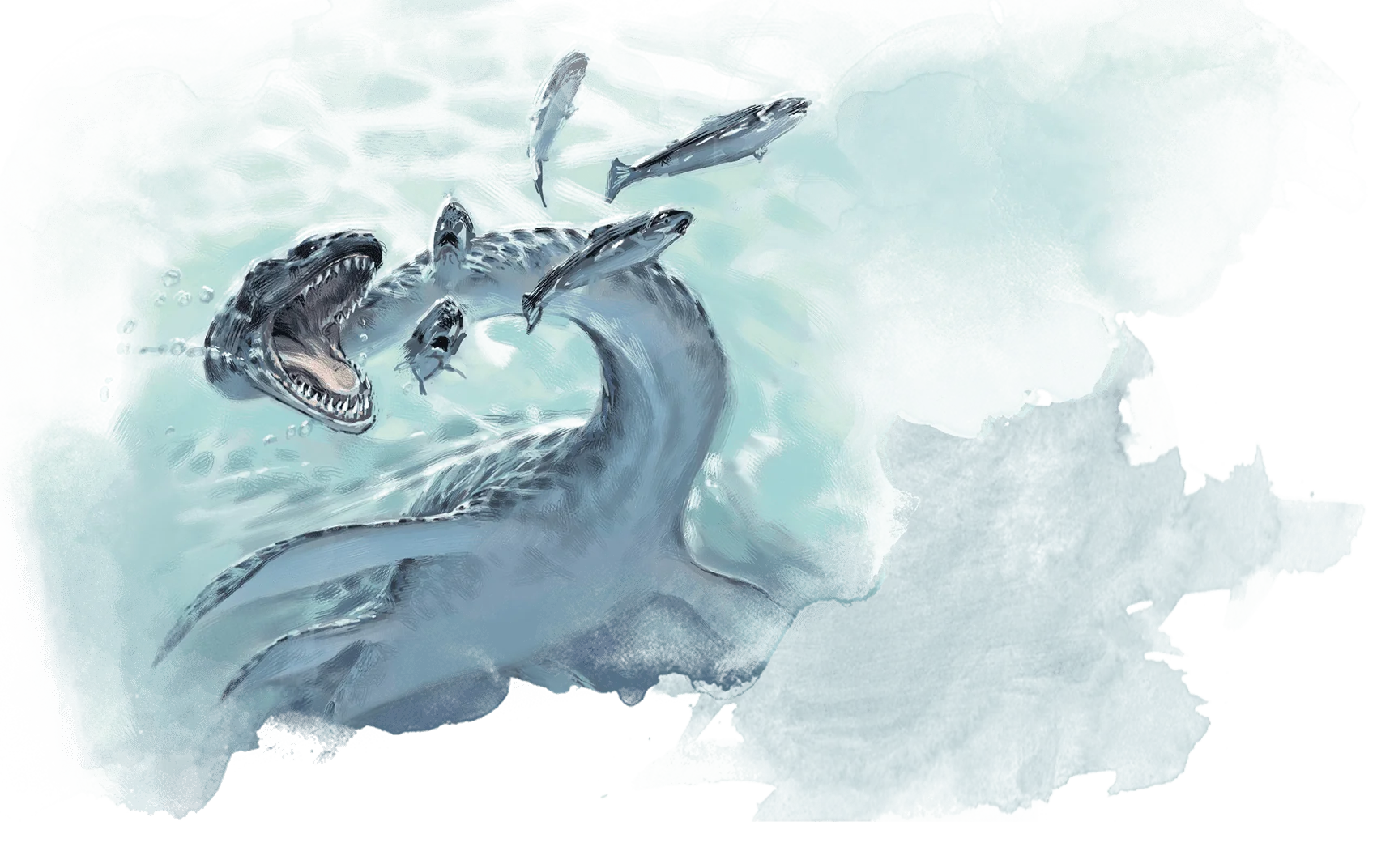
A two-headed plesiosaurus is a marine dinosaur whose compact body is driven by powerful flippers. Predatory and aggressive, it attacks any creature it encounters. Its flexible necks account for a third of its total length, letting it twist in any direction to deliver a powerful bite. Dinosaurs. Dinosaurs, or behemoths, are among the oldest reptiles in the world. Predatory dinosaurs are savage, territorial hunters. Herbivorous dinosaurs are less aggressive, but they might attack to defend their young, or if startled or harassed. Dinosaurs come in many sizes and shapes. Larger varieties often have drab coloration, while smaller dinosaurs have colorful markings akin to birds. Dinosaurs roam rugged and isolated areas that humanoids seldom visit, including remote mountain valleys, inaccessible plateaus, tropical islands, and deep fens. |